Thinking with a Word Processor:
thinking is essentially the activity of operating with signs ~Wittgenstein
performed by the hand, when we think by writing
by the mouth and the larynx, when we think by speaking
When Friedrich Nietzsche started to use a typewriter and sent some rhymes he produced on it to a friend, the latter - a composer - commented upon the robust language. "Perhaps you will through this instrument even take to a new idiom", the friend wrote; "with me at any rate this could happen; I do not deny that my 'thoughts' in music and language often depend on the quality of pen and paper."
text on the word processor's display is there to be updated - to be altered, revised
the writer "can begin anywhere in the text"
Michael Heim in his Electric Language: A Philosophical Study of Word Processing: "The immediacy of formulation in digital writing is akin to the immediacy of speaking.."
Parmenides: it is all one to me where I begin, he said - "faithfully reproducing", Havelock says, "the plunge that the bard takes into [his] medium"
Maintaining coherence is a matter of comparing texts with each other, as well as of comparing one bit of a text with other bits of the same text.
I don't think I agree that word-processing involves less access to the whole than does handwriting (and therfore less coherence)... no. but sure:
publishers now learn to be prepared for novel types of authors' mistakes, generated by the use of word processors - like, for example, paragraphs having been moved in such a manner that the result is nonsensical or like the same paragraph repeatedly occurring, having been copied to more than one place in the text.
basic form of networking is e -mail, and it is fascinating to observe how closely the style of e-mail messages tends to resemble that of spoken language. false starts and incoherent sentences
the technical possibility of sending off an e-mail letter on the spot - read your mail and answer it - on the spur of the moment, just like in a conversation.
networking blurs individual authorship. cooperative writing is easy: co-authors can readily revise and complement each other's texts.
that vast prepublication phase of scientific inquiry in which ideas and findings are discussed informally with colleagues, presented more formally in seminars & conferences & symposia, and distributed still more widely in the form of preprints... now possible to do all this in new way that is more thorough and systematic in its distribution, potentially global in scale, and almost instantaneous in speed, but ... unprecedentedly interactive...(42) [nice, note the html sup tags there] Scholarly inquiry in this new medium, called "scholarly skywriting" by Harnad, "is likely to become a lot more participatory, though", adds Harnad, "perhaps also more depersonalized, with ideas propagating and permuting on the net in directions over which their originators would be unable (and indeed perhaps unwilling) to claim proprietorship."
hmm. concludes that word-processing leads to thinking with others more. well ~ networking does maybe. but in first place the doing undoing ease of wordprocessing is what stands out to me. alt backspace. UNDO! thinking is like magic, not constrained by materiality. wordprocessing makes this all the more apparent ~
Wednesday, February 28, 2007

Monday, February 26, 2007
A Head For Detail
http://www.fastcompany.com/magazine/110/head-for-detail.html
me- refs VBush. similar to.. Ted _? /Ted Nelson. Xanadu. dlww 8
my concern is the logging of the consulting of the log
the log is for remembering, looking up
so when you look it up, that is logged also right?
my dlcs and dlww as here all abt how I get to things and the multiple paths leading out fr there (like my issues with ChooseYrOwnAdv - want to keep track of all the simultaneous alternatives as they split further and multiply)
*and* then I note when & why I go looking for sth and find it...
wh is fine, I guess.
what concerns me about this? ~recursiveness? that the logging itself becomes part of the life that is logged
(and if did not, then why log at all? unless you are going to consult it. and if you are, that's part of the log)
this url has been saved by 86 people.
del.icio.us/url/54b0f27afddc0a4889592d4428e555e7
I still think that a better approach is to *reduce* the amount of trivia you have to remember, but this kind of jump-in-with-both-feet approach is interesting jazzmasterson
(came to the page via noticing this note)
"I'm a big fan of forgetting," says Frank Nack, a German computer scientist who published a critique of lifelogging experiments last winter. "It's how we make sense of life, how we interpret things. vielmetti (edw ~ vacuum ... look at his dlcs marks)
more on lifelogging idlethink 2 days ago
... del.icio.us/idlethink/lifelogging
Lifelogging, an inevitability and this. I like the idea of the 'lifestream' -- but everything about this is still disquieting. 2 days ago
Lifelogging: On the Record, All the Time this clinches it: we are evolving a map of Life that is of the same scale as Life itself.. 4 days ago
http://www.idlethink.com/archives/2007/02/
idleThinK [v3]: a faint blue idea of order | troubled thoughts on the train 24.02.2007:
A while back, vis-a-vis Borges, I wrote about lifelogging without knowing there was a name for it. Today I realize it was prescient [ChronicleHigherEdu discussn of article: On the Record, All the Time] -- people have been experimenting with lifelogging, going around with audiovisual cameras slung around their necks like slack nooses [ChronicleHigherEdu article: On the Record, All the Time], recording every minute of their lives. Apparently scientists have been talking about doing this for years [Atlanic.com VBush article].
so, her blog looks cool too. and look at her other dlcs marks and tags, eg lookingahead ...
Kristof Nyiri: Thinking with a Word Processor With the word processor becoming our writing instrument, what changes do there occur, if any, in the ways and content of our thinking? In particular, what changes can there be discerned, or expected, in terms of the organization of our ideas...
http://www.fastcompany.com/magazine/110/head-for-detail.html
me- refs VBush. similar to.. Ted _? /Ted Nelson. Xanadu. dlww 8
my concern is the logging of the consulting of the log
the log is for remembering, looking up
so when you look it up, that is logged also right?
my dlcs and dlww as here all abt how I get to things and the multiple paths leading out fr there (like my issues with ChooseYrOwnAdv - want to keep track of all the simultaneous alternatives as they split further and multiply)
*and* then I note when & why I go looking for sth and find it...
wh is fine, I guess.
what concerns me about this? ~recursiveness? that the logging itself becomes part of the life that is logged
(and if did not, then why log at all? unless you are going to consult it. and if you are, that's part of the log)
this url has been saved by 86 people.
del.icio.us/url/54b0f27afddc0a4889592d4428e555e7
I still think that a better approach is to *reduce* the amount of trivia you have to remember, but this kind of jump-in-with-both-feet approach is interesting jazzmasterson
(came to the page via noticing this note)
"I'm a big fan of forgetting," says Frank Nack, a German computer scientist who published a critique of lifelogging experiments last winter. "It's how we make sense of life, how we interpret things. vielmetti (edw ~ vacuum ... look at his dlcs marks)
more on lifelogging idlethink 2 days ago
... del.icio.us/idlethink/lifelogging
Lifelogging, an inevitability and this. I like the idea of the 'lifestream' -- but everything about this is still disquieting. 2 days ago
Lifelogging: On the Record, All the Time this clinches it: we are evolving a map of Life that is of the same scale as Life itself.. 4 days ago
del.icio.us / idlethink /by rAchel
= idleThinK [v3]: a faint blue idea of orderhttp://www.idlethink.com/archives/2007/02/
idleThinK [v3]: a faint blue idea of order | troubled thoughts on the train 24.02.2007:
A while back, vis-a-vis Borges, I wrote about lifelogging without knowing there was a name for it. Today I realize it was prescient [ChronicleHigherEdu discussn of article: On the Record, All the Time] -- people have been experimenting with lifelogging, going around with audiovisual cameras slung around their necks like slack nooses [ChronicleHigherEdu article: On the Record, All the Time], recording every minute of their lives. Apparently scientists have been talking about doing this for years [Atlanic.com VBush article].
so, her blog looks cool too. and look at her other dlcs marks and tags, eg lookingahead ...
Kristof Nyiri: Thinking with a Word Processor With the word processor becoming our writing instrument, what changes do there occur, if any, in the ways and content of our thinking? In particular, what changes can there be discerned, or expected, in terms of the organization of our ideas...
Sunday, February 25, 2007
Lance Mannion:
I have seen the other four nominees, and reviewed three of them, The Queen, The Departed,Little Miss Sunshine---that's my latest post at newcritics. I think of it as my other review of Little Miss Sunshine. I plan to do a second review looking at a different aspect of the film here.
Babel is the most Best Picture-like movie out of all the nominees, except for probably Letters From Iwo Jima, which I really wish I'd seen. But because Eastwood already has two Best Picture Academy Awards, and because The Queen is a great character study but not all that exceptional a movie---it is an excellent piece of filmmaking, the way a bookshelf can be an excellent bit of carpentry but you wouldn't compare it to a Hoosier cabinet---and because and now Little Miss Sunshine, the movie I most loved and enjoyed, is actually fairly slight slight - right, that's the word for it, and because this is Marty's year for Best Director, I expect The Departed to win Best Picture.
But, still, don't be surprised, if the Academy looks at it, says, well, even so, it's not his best work and take away the blood and the profanity and it's kind of a run of the mill cops and robber picture and...the heck with it...there are no great movies up this year, let's go with the movie Lance Mannion most loved and enjoyed just because it was lovable and enjoyable.
newcritics - » The Eyes of Little Miss Sunshine:
Richard is the main character, and the story of the movie is his change from being the villain of his family to its hero. If that’s not obvious it’s because Kinnear is such a generous, self-effacing, a pitch-perfect actor; he blends into the ensemble the way individuals blend into their families.
Kinnear never makes a play for the audience’s sympathy, before or after he changes. When Richard is at his most self-centered worst, Kinnear doesn’t give us any signs to latch onto that Richard is at heart a decent and loving husband, a concerned and interested father, a loyal and helpful son. And when Richard does change and starts acting as if he is all those things, because that’s who he really is, Kinnear still makes no grabs for our heartstrings.
Richard is a hard-working and disciplined man. That’s his main virtue. That’s what convinced him he had something to teach people about becoming successful. He doesn’t let his feelings get in the way of what he thinks are his responsibilities, not when his feelings are all selfish ones, and not when he’s allowed his better nature to take over.
With each jolt Kinnear looks slightly more dazed, slightly less determined, but still closed off, still lost in himself, as if still thinking about how to save his dream, only now he’s thinking with more desperate speed, and it’s not until he’s forced to make a choice between doing the responsible, realistic thing and making his daughter happy that we realize that he has already changed.
I have seen the other four nominees, and reviewed three of them, The Queen, The Departed,Little Miss Sunshine---that's my latest post at newcritics. I think of it as my other review of Little Miss Sunshine. I plan to do a second review looking at a different aspect of the film here.
Babel is the most Best Picture-like movie out of all the nominees, except for probably Letters From Iwo Jima, which I really wish I'd seen. But because Eastwood already has two Best Picture Academy Awards, and because The Queen is a great character study but not all that exceptional a movie---it is an excellent piece of filmmaking, the way a bookshelf can be an excellent bit of carpentry but you wouldn't compare it to a Hoosier cabinet---and because and now Little Miss Sunshine, the movie I most loved and enjoyed, is actually fairly slight slight - right, that's the word for it, and because this is Marty's year for Best Director, I expect The Departed to win Best Picture.
But, still, don't be surprised, if the Academy looks at it, says, well, even so, it's not his best work and take away the blood and the profanity and it's kind of a run of the mill cops and robber picture and...the heck with it...there are no great movies up this year, let's go with the movie Lance Mannion most loved and enjoyed just because it was lovable and enjoyable.
newcritics - » The Eyes of Little Miss Sunshine:
Richard is the main character, and the story of the movie is his change from being the villain of his family to its hero. If that’s not obvious it’s because Kinnear is such a generous, self-effacing, a pitch-perfect actor; he blends into the ensemble the way individuals blend into their families.
Kinnear never makes a play for the audience’s sympathy, before or after he changes. When Richard is at his most self-centered worst, Kinnear doesn’t give us any signs to latch onto that Richard is at heart a decent and loving husband, a concerned and interested father, a loyal and helpful son. And when Richard does change and starts acting as if he is all those things, because that’s who he really is, Kinnear still makes no grabs for our heartstrings.
Richard is a hard-working and disciplined man. That’s his main virtue. That’s what convinced him he had something to teach people about becoming successful. He doesn’t let his feelings get in the way of what he thinks are his responsibilities, not when his feelings are all selfish ones, and not when he’s allowed his better nature to take over.
With each jolt Kinnear looks slightly more dazed, slightly less determined, but still closed off, still lost in himself, as if still thinking about how to save his dream, only now he’s thinking with more desperate speed, and it’s not until he’s forced to make a choice between doing the responsible, realistic thing and making his daughter happy that we realize that he has already changed.
Saturday, February 24, 2007
Greatness of 'Weeds' ... Tim Goodman, August 11, 2006:
Elsewhere, as you'll find when you get back from the store with that DVD of season 1 (the reason I am looking up these reviews is last nite I bought the 2 dvds bcs hollywood video had sale where anything marked 9.99 each as these were was only $5 yay), Perkins is delicious in her scathing unhappiness; Nealon is a stone-cold surprise as the quirky, affable older stoner; Malco shows all kinds of range; Kirk is the devilish raconteur; and both Parrish and Gould bring uncommon depth to their roles as the sons (it's hard to be preciously introverted and sad without becoming cloying, but Parrish pulls it off, and Gould gives you a look at what a real teenager is, rather than a TV teenager who speaks as if he's 35).
For its second season, "Weeds" is ratcheting up the drama with a series of bold changes. Normally, you'd be worried about the accelerated sense of drama in a sophomore series, but not only is this collection of writers and actors able to pull it off, but you also get the sense that nobody involved in "Weeds" -- from creator Kohan to star Parker -- got involved with this project to make average television.
Even your friendly neighborhood critic came to this series late (my boss, David Wiegand, reviewed the first season -- favorably -- when I was otherwise busy for some long-lost reason).
David Wiegand, Friday, August 5, 2005 Smoldering frustrations in suburbia spark up in Showtime's superb 'Weeds'
Elsewhere, as you'll find when you get back from the store with that DVD of season 1 (the reason I am looking up these reviews is last nite I bought the 2 dvds bcs hollywood video had sale where anything marked 9.99 each as these were was only $5 yay), Perkins is delicious in her scathing unhappiness; Nealon is a stone-cold surprise as the quirky, affable older stoner; Malco shows all kinds of range; Kirk is the devilish raconteur; and both Parrish and Gould bring uncommon depth to their roles as the sons (it's hard to be preciously introverted and sad without becoming cloying, but Parrish pulls it off, and Gould gives you a look at what a real teenager is, rather than a TV teenager who speaks as if he's 35).
For its second season, "Weeds" is ratcheting up the drama with a series of bold changes. Normally, you'd be worried about the accelerated sense of drama in a sophomore series, but not only is this collection of writers and actors able to pull it off, but you also get the sense that nobody involved in "Weeds" -- from creator Kohan to star Parker -- got involved with this project to make average television.
Even your friendly neighborhood critic came to this series late (my boss, David Wiegand, reviewed the first season -- favorably -- when I was otherwise busy for some long-lost reason).
David Wiegand, Friday, August 5, 2005 Smoldering frustrations in suburbia spark up in Showtime's superb 'Weeds'
Weeds 2nd season finale (last fall)
Tim Goodman. The Bastard Machine : Bad news and good news; "Wire" and "Weeds": '
in comments, cut & paste of Goodman's (1Nov06?) column re Weeds season 2 finale
Weeds has managed, in two brief seasons, to get the balance right between provocative adult comedy and serious adult drama. It has managed to be soapy but real, grounded but insane, and electrically hip in the process.
Consider only two of the Season 1 tidbits that Kohan and company dished up: Celia has cancer, and Nancy falls in love with Peter (Martin Donovan), a DEA agent. Those were solid clues that "Weeds" was not a series afraid to lurch forward, plot-wise.
______________
comments also re Halloween
--you must be talking Lawton Ave. and yes those folks rule as one woman was even dragging her stash around in a little cooler cart
--ya have to put up with the political pumpkins, but Rockridge does rule for littl'uns and their alchie parents on Halloween
Tim Goodman. The Bastard Machine : Bad news and good news; "Wire" and "Weeds": '
in comments, cut & paste of Goodman's (1Nov06?) column re Weeds season 2 finale
Weeds has managed, in two brief seasons, to get the balance right between provocative adult comedy and serious adult drama. It has managed to be soapy but real, grounded but insane, and electrically hip in the process.
Consider only two of the Season 1 tidbits that Kohan and company dished up: Celia has cancer, and Nancy falls in love with Peter (Martin Donovan), a DEA agent. Those were solid clues that "Weeds" was not a series afraid to lurch forward, plot-wise.
______________
comments also re Halloween
--you must be talking Lawton Ave. and yes those folks rule as one woman was even dragging her stash around in a little cooler cart
--ya have to put up with the political pumpkins, but Rockridge does rule for littl'uns and their alchie parents on Halloween
JamesBowman.net | Little Miss Sunshine
While Richard’s relentlessly upbeat personality always hints of tragedy, Frank’s theatrical misery is inescapably comic.
Poor Sheryl is left to hold the line btw the grim optimism of Richard and the luxurious despair of Frank.
While Richard’s relentlessly upbeat personality always hints of tragedy, Frank’s theatrical misery is inescapably comic.
Poor Sheryl is left to hold the line btw the grim optimism of Richard and the luxurious despair of Frank.
Barbelith Underground > Film, TV & Theatre > Little Miss Sunshine: huh starts right out with what I was wondering about (in fact I got here via ggl for the movie title plus 'divorce'
...the filmmakers wait until near the end of the film to very indirectly reveal an essential element about the relationship of the teenage son, Dwayne, to the rest of the family.
-It must have been subtle as I'm not sure what you mean and I saw it today! Perhaps unrelated but is it that his mother was previously married, and Olive's dad isn't his dad? I was a little confused about him shouting "divorce" at her when he goes into his screaming purge by the side of the road. me too!
--That was it. Throughout the movie, I couldn't see really why Dwayne was so disconnected (it wasn't even father-son animosity) from his dad while Olive was so attached, but when it was revealed that he's NOT Dwayne's dad, a lot of the character's history came into focus.
---I thought Dwayne screamed "divorce" at his mom in reference to her threats to divorce his dad over the failure-to-launch of his book.
right, I thought this too. does the film answer which of these he means?
...the filmmakers wait until near the end of the film to very indirectly reveal an essential element about the relationship of the teenage son, Dwayne, to the rest of the family.
-It must have been subtle as I'm not sure what you mean and I saw it today! Perhaps unrelated but is it that his mother was previously married, and Olive's dad isn't his dad? I was a little confused about him shouting "divorce" at her when he goes into his screaming purge by the side of the road. me too!
--That was it. Throughout the movie, I couldn't see really why Dwayne was so disconnected (it wasn't even father-son animosity) from his dad while Olive was so attached, but when it was revealed that he's NOT Dwayne's dad, a lot of the character's history came into focus.
---I thought Dwayne screamed "divorce" at his mom in reference to her threats to divorce his dad over the failure-to-launch of his book.
right, I thought this too. does the film answer which of these he means?
"Classic albums that aren't as good as everyone says" -az list:
O. Buxton says:
"They said: It's the greatest album ever made. Um, except for a few others. In fact: it's not even the greatest album Radiohead's ever made (the Bends is)."
"They said: the very apex of the Rolling Stones acheivement. In fact: Too long, badly mixed and not half as good as the one with Gimme Shelter on it."
"They said: The saviours of British rock n roll. In fact: Unimaginative apists of the Beatles (in their least interesting period)."
"They said: A new direction for gritty chick rock. In fact: Bunny boiler on an album length grizzle. Turn that racket off!"
(re- OK Computer, Exile on Main Street, Oasis, Alanis Morrisette)
funny. They said / In fact.
O. Buxton says:
"They said: It's the greatest album ever made. Um, except for a few others. In fact: it's not even the greatest album Radiohead's ever made (the Bends is)."
"They said: the very apex of the Rolling Stones acheivement. In fact: Too long, badly mixed and not half as good as the one with Gimme Shelter on it."
"They said: The saviours of British rock n roll. In fact: Unimaginative apists of the Beatles (in their least interesting period)."
"They said: A new direction for gritty chick rock. In fact: Bunny boiler on an album length grizzle. Turn that racket off!"
(re- OK Computer, Exile on Main Street, Oasis, Alanis Morrisette)
funny. They said / In fact.
It's so black that if you were to ask, how much blacker could it be, the answer would be None. None more black. -- that documentary about a band, whats it called. Spinal Tap. maybe. (also: It goes to eleven.)
Douglas Adams, in The Restaurant at the End of the Universe, describes a sleek black stuntship:
"'It's so ... black!' said Ford Prefect, 'you can hardly make out its shape ... light just seems to fall into it!' Zaphod said nothing. He had simply fallen in love. The blackness of it was so extreme that it was almost impossible to tell how close you were standing to it."
The illustrious Springboks may boast the most tank-like forwards, the English (in their lilly white!) a gargantuan pack of solid iron, the French famously unpredictable elan and flair nice sentence he's got going here backed up by uncompromising muscle, but only the New Zealanders take the field in All Black.
There are no go-faster stripes; no interwoven crests, no braid, no sponsorship logos, no player names emblazoned across its shoulder (every new All Black is told "this is not your shirt; you are just the current custodian"). It is just black, pure black, interrupted only by the manafacturer's logo and the silver fern which emblemises new Zealand Rugby.
Credit to Adidas, then, who only picked up the All Blacks contract in the last decade, and had the sense not to jazz up the All Blacks jersey, but to further simplify it (removing the white collar and the (small) brewer's logo). Credit to the NZRFU for appreciating the value of the mystique, and refusing to sell an actual match specimen to anyone: this is a very similar shirt, make no mistake, but it's not an exact rendition of the model worn on the field by the New Zealand All Blacks.
If you want one of those, there's only one way to get it.
And that's how it should be.
O. Buxton: Reviews p2.
There are no go-faster stripes; no interwoven crests, no braid, no sponsorship logos, no player names emblazoned across its shoulder (every new All Black is told "this is not your shirt; you are just the current custodian"). It is just black, pure black, interrupted only by the manafacturer's logo and the silver fern which emblemises new Zealand Rugby.
Credit to Adidas, then, who only picked up the All Blacks contract in the last decade, and had the sense not to jazz up the All Blacks jersey, but to further simplify it (removing the white collar and the (small) brewer's logo). Credit to the NZRFU for appreciating the value of the mystique, and refusing to sell an actual match specimen to anyone: this is a very similar shirt, make no mistake, but it's not an exact rendition of the model worn on the field by the New Zealand All Blacks.
If you want one of those, there's only one way to get it.
And that's how it should be.
| ||||||||
O. Buxton: Reviews p2.
az- The Seven Basic Plots: Why We Tell Stories - by Christopher Booker - the book doesn't sound worth reading. but this review is int, maybe read other rvws by this reviewer...
-yeah, review for My Name Was Judas (recently published in UK) is good too. and, New Zealand. cool.
This terrific novel purports to give an alternative account of the life of Jesus, as witnessed by his childhood friend Judas who didn't, in this telling, hang himself (or even betray Jesus in the first place) being guilty only of skepticism where his fellow disciples were not. My Name Was Judas is beautifully written, thoroughly researched, and gently (and therefore devastatingly) subversive - not because it is blasphemously irreverent (it isn't) nor because it is alleges itself to be true and therefore falsifying of biblical texts (it doesn't), but because the account it gives, even though overtly fictional, is so much more plausible than the traditional story.
The other remarkable thing about this book is that a New Zealander like Stead should be writing a non-domestic story at all, let alone with such elan. New Zealand literary circles, such as they are (we New Zealanders, on the whole, don't go in for reading in a big way), are usually at pains to assert their domestic cultural credentials (what is domestic culture, I mean what are credentials in it?), and New Zealand literature which doesn't is viewed by the defensive Kiwi literati as either worthless or a bit too big for its boots. huh. This "cultural cringe" factor leads to mostly worthy but humourless and dull output, which is probably *why* New Zealanders don't read much, come to think of it. heh. Stead is one of New Zealand's foremost living writers, so perhaps he can get away with it, but in any case such an openly outward looking perspective is to be celebrated, especially when done so well.
- and re Fashionable Nonsense, by Alan Sokal
While the poseurs cited in this book are certainly (for the most part) huh ok maybe phoneys or idiots, I think Thomas Kuhn was neither, and while Paul Feyerabend overplayed the court jester hand, he had some important things to say too.
So, to the first point: Proving that one writer (or a hundred, or a thousand) who purports to adhere to relativism is a charlatan doesn't establish anything about *the idea* of relativism. All you have established is that you have a found yourself a charlatan. Give yourself a star. But while you're pinning it on, remember that postmodernists do not have a monopoly on illogical, bamboozling, balderdash. Example: Sir Roger Penrose (Emeritus Rouse Ball professor of mathematics at Oxford University, no less) and his dreadful, lumpen-headed, and deliberately bamboozling anti-AI tract "The Emperor's New Mind". The very point of the (no doubt correct but nonetheless entirely irrelevant) science deluged on the reader in that book is to obscure the fact that the real emperor was Roger Penrose and his arguments on AI really blow the kumara.
Sokal provides the following account of cognitive relativism: "While scientists ... try to obtain an objective view ... of the world, relativist thinkers tell them that they are wasting their time and that such an enterprise is, in principle, an illusion." Now that, to put it mildly, is a *very* punchy version of relativism, and not one that any credible relativist philosopher I know of (and certainly not Thomas Kuhn, who spent a whole book explaining how and why the process scientific discovery works) subscribes to. ..At the end of the day, properly stated cognitive relativism is no a threat to modern scientific discourse, except that it relegates the scientist from "truth knower" or "person through whom you may have exclusive access to the truth" (sounds a bit like a grand high pooh-bah or - dare I say it - high priest, doesn't it?) to "person whose theory works the best for now" right and who may be in competition for that status with other people in the community whether or not they're scientists.
If science *does* work better than feng shui or healing crystals (and I, for one, think it does) then this shouldn't be a particularly troubling way of looking at the world for a scientist who is at ease right with his views and his value to the community right right.
he's really very good, this olly buxton, isn't he? give yourself a star. but while you're pinning it on... very punchy to put it mildly. at the end of the day.
this continuum book eyecatching. noticed on hold shelf few days ago. bcs big- thick square binding. and then title gets attn, what are the 7 plots? that all stories reduce to.

Amazon.com: Profile For O. Buxton: ReviewsThis book, which by all accounts has taken Christopher Booker 30 years to write, isn't the first attempt to distil all of storytelling down to a few archetypes. I dare say it won't be the last, either. While it's a fantastically learned, well-read, and at times insightful entry on the subject, it encounters the same problems others like Joseph Campbell have: that that the facts of actual literature tend to sit uneasily with the unifying theory, and that the unifying theory itself tends to rest on an analysis of human psychology which sounds like it might be so much bunk, and a particular world view - moral objectivism - which definitely is.
O. Buxton "Olly Buxton" (Highgate, UK) - See all my reviews 

Both Jungian psychoanalysis and moral objectivity are taken as read by Christopher Booker and as such he spends no time justifying them (perhaps understandably - the arguments for and against each would fill this book many times over). Nonetheless, in my view, he's simply wrong about both of them, and it blows a Big Hole in his Big Idea. Booker's Big Idea is this: when you boil them down, there are only seven archetypal stories in all of literature, and further that if you boil those archetypes down, they are in many ways the same story viewed from different perspectives. This is perhaps intuitively understandable: in the broadest sense all stories are a variation of "there once was a problem, and it got resolved"- but the kicker is this: Booker asserts that any story which fails to follow his prescription is - objectively - flawed.


-yeah, review for My Name Was Judas (recently published in UK) is good too. and, New Zealand. cool.
This terrific novel purports to give an alternative account of the life of Jesus, as witnessed by his childhood friend Judas who didn't, in this telling, hang himself (or even betray Jesus in the first place) being guilty only of skepticism where his fellow disciples were not. My Name Was Judas is beautifully written, thoroughly researched, and gently (and therefore devastatingly) subversive - not because it is blasphemously irreverent (it isn't) nor because it is alleges itself to be true and therefore falsifying of biblical texts (it doesn't), but because the account it gives, even though overtly fictional, is so much more plausible than the traditional story.
The other remarkable thing about this book is that a New Zealander like Stead should be writing a non-domestic story at all, let alone with such elan. New Zealand literary circles, such as they are (we New Zealanders, on the whole, don't go in for reading in a big way), are usually at pains to assert their domestic cultural credentials (what is domestic culture, I mean what are credentials in it?), and New Zealand literature which doesn't is viewed by the defensive Kiwi literati as either worthless or a bit too big for its boots. huh. This "cultural cringe" factor leads to mostly worthy but humourless and dull output, which is probably *why* New Zealanders don't read much, come to think of it. heh. Stead is one of New Zealand's foremost living writers, so perhaps he can get away with it, but in any case such an openly outward looking perspective is to be celebrated, especially when done so well.
- and re Fashionable Nonsense, by Alan Sokal
While the poseurs cited in this book are certainly (for the most part) huh ok maybe phoneys or idiots, I think Thomas Kuhn was neither, and while Paul Feyerabend overplayed the court jester hand, he had some important things to say too.
So, to the first point: Proving that one writer (or a hundred, or a thousand) who purports to adhere to relativism is a charlatan doesn't establish anything about *the idea* of relativism. All you have established is that you have a found yourself a charlatan. Give yourself a star. But while you're pinning it on, remember that postmodernists do not have a monopoly on illogical, bamboozling, balderdash. Example: Sir Roger Penrose (Emeritus Rouse Ball professor of mathematics at Oxford University, no less) and his dreadful, lumpen-headed, and deliberately bamboozling anti-AI tract "The Emperor's New Mind". The very point of the (no doubt correct but nonetheless entirely irrelevant) science deluged on the reader in that book is to obscure the fact that the real emperor was Roger Penrose and his arguments on AI really blow the kumara.
Sokal provides the following account of cognitive relativism: "While scientists ... try to obtain an objective view ... of the world, relativist thinkers tell them that they are wasting their time and that such an enterprise is, in principle, an illusion." Now that, to put it mildly, is a *very* punchy version of relativism, and not one that any credible relativist philosopher I know of (and certainly not Thomas Kuhn, who spent a whole book explaining how and why the process scientific discovery works) subscribes to. ..At the end of the day, properly stated cognitive relativism is no a threat to modern scientific discourse, except that it relegates the scientist from "truth knower" or "person through whom you may have exclusive access to the truth" (sounds a bit like a grand high pooh-bah or - dare I say it - high priest, doesn't it?) to "person whose theory works the best for now" right and who may be in competition for that status with other people in the community whether or not they're scientists.
If science *does* work better than feng shui or healing crystals (and I, for one, think it does) then this shouldn't be a particularly troubling way of looking at the world for a scientist who is at ease right with his views and his value to the community right right.
he's really very good, this olly buxton, isn't he? give yourself a star. but while you're pinning it on... very punchy to put it mildly. at the end of the day.
Friday, February 23, 2007
Trees Lounge: The 50 States: July 4th Compilation comments and trackbacks...
-Wow, that's one of the greatest blog posts ever! Great job and thanks for all the tunes.
oh no. none of the links work anymore. just realized. bummer.
but, the list is still the most pleasing to me. would have been nice to have all those songs though I suppose.
-Best Week Ever » Blog Archive » LISTEN UP: BWE’s Daily Dose of the Best Music Ever: Normally when we do these mp3 round ups we here at BWE direct you to a bunch of cool sites and tell you what songs are available on any given today. Today we re going to break from tradition. There’s only one site you need to visit today: Trees Lounge. Now, I’m sure that there are tons of other great updates available on the web today, but sadly I’m not going to have time to check. I’m going to be kinda busy downloading the 700+ tracks Trees Lounge is offering. Okay, I’m probably not going to download all of them, but I’m going to try. Wish me luck.
-Forget what blogs are for? They are for awesome projects like this one: Trees Lounge provides a tour of the 50 states through MP3s. It's like Sufjan, but way more comprehensive.
Sufjan? Wkp - Sufjan Stevens (born July 1, 1975) is an American singer-songwriter and musician from Michigan.
-Wow, that's one of the greatest blog posts ever! Great job and thanks for all the tunes.
oh no. none of the links work anymore. just realized. bummer.
but, the list is still the most pleasing to me. would have been nice to have all those songs though I suppose.
-Best Week Ever » Blog Archive » LISTEN UP: BWE’s Daily Dose of the Best Music Ever: Normally when we do these mp3 round ups we here at BWE direct you to a bunch of cool sites and tell you what songs are available on any given today. Today we re going to break from tradition. There’s only one site you need to visit today: Trees Lounge. Now, I’m sure that there are tons of other great updates available on the web today, but sadly I’m not going to have time to check. I’m going to be kinda busy downloading the 700+ tracks Trees Lounge is offering. Okay, I’m probably not going to download all of them, but I’m going to try. Wish me luck.
-Forget what blogs are for? They are for awesome projects like this one: Trees Lounge provides a tour of the 50 states through MP3s. It's like Sufjan, but way more comprehensive.
Sufjan? Wkp - Sufjan Stevens (born July 1, 1975) is an American singer-songwriter and musician from Michigan.
- 2.1 The Fifty States Project Beginning with Michigan, Stevens announced an intent to write an album for each of the 50 U.S. states, although in interviews he wavers between utter sincerity and self-deprecating irony when describing the idea.
and the one I know -
i've been thinking - i've been thinking i've been thinking too much
i just want to live now for a little while ... Vonda Shepard - Maryland - opening clip at Last.fm
i'm just working for a living singing with my friends
maryland i'm coming home never worry about what i did wrong
and that i'll never be what my daddy wanted me to be
and i'll never see what my mama's dreams were
i wanna fly i wanna fly down the highway to my home away from home
this funky funky club on fairfax avenue to see you
i'll never give up
because what is there to give up anyway
i'm just working for a living working for my pay
in maryland it's raining somewhere in some cafe
i've been thinking - i've been thinking i've been thinking too much
i just want to live now for a little while ... Vonda Shepard - Maryland - opening clip at Last.fm
i'm just working for a living singing with my friends
maryland i'm coming home never worry about what i did wrong
and that i'll never be what my daddy wanted me to be
and i'll never see what my mama's dreams were
i wanna fly i wanna fly down the highway to my home away from home
this funky funky club on fairfax avenue to see you
i'll never give up
because what is there to give up anyway
i'm just working for a living working for my pay
in maryland it's raining somewhere in some cafe
Md - Trees Lounge: The 50 States: July 4th Compilation
Maryland
 what's that? ah, view image on the site tells me: Maryland Governor's Office. huh, so, near Annapolis? or in it? that's the Governor's house, isn't it, that's right in town. inside one of those circles. how bout that, that I'm not sure. well.
Maryland, daughter of the east. ..Baltimore proved to have plenty of songs about it, but I can't help but feel I didn't give the rest of the state a very fair shake. .. Maryland, you have given us such great contributions as the US Naval Academy, the first catholic cathedral in the united states, the first school in the united states, first DENTAL school in the us, Babe Ruth, Cal Ripken Jr, Billy Ripken, some other baseball guys, Francis Scott Key, The Star Spangled Banner, the National Aquarium, the first hot-air balloon launch, the telegraph pole, recipient of the first telegraph message, workmens comp, Greenbelt, the methodist church of america, more miles of shoreline than any other state (4400miles!)huh I didn't know that, Spiro Agnew, John Wilkes Booth, James Cain, Frederick Douglas, Philip Glass, Billie Holiday, Johns Hopkins, Thurgood Marshall, HL Mencken, Upton Sinclair, Harriet Tubman, Frank Zappa, John Waters, 2Pac. hmm well this list does not int as much as that for Chicago (well ~ Illinois). We love you, Maryland.
Maryland
 what's that? ah, view image on the site tells me: Maryland Governor's Office. huh, so, near Annapolis? or in it? that's the Governor's house, isn't it, that's right in town. inside one of those circles. how bout that, that I'm not sure. well.
 Maryland, daughter of the east. ..Baltimore proved to have plenty of songs about it, but I can't help but feel I didn't give the rest of the state a very fair shake. .. Maryland, you have given us such great contributions as the US Naval Academy, the first catholic cathedral in the united states, the first school in the united states, first DENTAL school in the us, Babe Ruth, Cal Ripken Jr, Billy Ripken, some other baseball guys, Francis Scott Key, The Star Spangled Banner, the National Aquarium, the first hot-air balloon launch, the telegraph pole, recipient of the first telegraph message, workmens comp, Greenbelt, the methodist church of america, more miles of shoreline than any other state (4400miles!)huh I didn't know that, Spiro Agnew, John Wilkes Booth, James Cain, Frederick Douglas, Philip Glass, Billie Holiday, Johns Hopkins, Thurgood Marshall, HL Mencken, Upton Sinclair, Harriet Tubman, Frank Zappa, John Waters, 2Pac. hmm well this list does not int as much as that for Chicago (well ~ Illinois). We love you, Maryland.
Roy Buchanan - Baltimore
Il - Trees Lounge: The 50 States: July 4th Compilation
Illinois
 Oh Illinois -- noble displayer of cornfields and silos. You put the heart in heartland, and the plain in plains. Drive east and you'll find the silos keep getting bigger and bigger until they are skyscrapers. Stop before the lake and you're in for a treat. Chicago is a city of the world, one of the most beautiful cities I have ever visited and I still make nearly monthly trips. I am in awe of your public library, your giant chrome jelly bean, and the Sears Tower. You're also the only place in the US I have ever been that has a 4am bartime, and for that -- well for that, I salut you!
Illinois, you have such distinguishing features as the worlds first aquarium, the worlds first skyscraper, the tallest building in north america, Metropolis, you were the first state to ratify the 13th amendment, McDonalds oh right started here, Ronald Reagan, a huge fire funny this inclusion, Abraham Lincoln, the ice cream sundae wha?, worlds first silo, countries highest percentage of personalized license plates huh, the largest public library, Jane Addams, Gillian Anderson, my grandparents, Jack Benny, Ray Bradbury, Jennie Garth I love this mix of folks, Cindy Crawford, Richard Daley, Miles Davis, Walt Disney, Harrison Ford, Benny Goodman, Dorothy Hamil, Ernest Hemingway, Charlton Heston, Wild Bill, Rock Hudson, James Jones, Quincy Jones, David Mamet, Bill Murray, Bob Newhardt, Richard Pryor, Sam Shepard, Raquel Welch, Wilco, Andrew Bird, The Smashing Pumpkins, and and and, and the Oreo factory. Oh yeah, and you crazy micks in Chicago are going to dye the freakin' river green this weekend!
oh also I like Lucinda Williams singing whose song? "think I'll go to Chicago, look around over there"
* Low - is that the band that does ~slow ~shoegazing ?sth like that, rg telling me about...
Low (band) - Wkp: Their music is commonly described as 'slowcore,' a subgenre characterised by slow tempos and minimalist arrangements. They are one of the earlier bands to adopt and popularize the style, making them considerable contributors to the slowcore movement. (It is worth noting that the band dislike this tag. In an interview Alan Sparhawk says of descriptions of their music: What's the cheesiest? Slow-core. I hate that word. The most appropriate is anything that uses the word minimal in it, but I don't think anybody's made one up for that. ) Parker and Sparhawk's striking vocal harmonies represent perhaps the group's most distinctive element; critic Denise Sullivan writes that their shared vocals are 'as chilling as anything Gram and Emmylou ever conspired on -- though that's not to say it's country-tinged, just straight from the heart.' mmmm
Illinois
 Oh Illinois -- noble displayer of cornfields and silos. You put the heart in heartland, and the plain in plains. Drive east and you'll find the silos keep getting bigger and bigger until they are skyscrapers. Stop before the lake and you're in for a treat. Chicago is a city of the world, one of the most beautiful cities I have ever visited and I still make nearly monthly trips. I am in awe of your public library, your giant chrome jelly bean, and the Sears Tower. You're also the only place in the US I have ever been that has a 4am bartime, and for that -- well for that, I salut you!
Illinois, you have such distinguishing features as the worlds first aquarium, the worlds first skyscraper, the tallest building in north america, Metropolis, you were the first state to ratify the 13th amendment, McDonalds oh right started here, Ronald Reagan, a huge fire funny this inclusion, Abraham Lincoln, the ice cream sundae wha?, worlds first silo, countries highest percentage of personalized license plates huh, the largest public library, Jane Addams, Gillian Anderson, my grandparents, Jack Benny, Ray Bradbury, Jennie Garth I love this mix of folks, Cindy Crawford, Richard Daley, Miles Davis, Walt Disney, Harrison Ford, Benny Goodman, Dorothy Hamil, Ernest Hemingway, Charlton Heston, Wild Bill, Rock Hudson, James Jones, Quincy Jones, David Mamet, Bill Murray, Bob Newhardt, Richard Pryor, Sam Shepard, Raquel Welch, Wilco, Andrew Bird, The Smashing Pumpkins, and and and, and the Oreo factory. Oh yeah, and you crazy micks in Chicago are going to dye the freakin' river green this weekend!

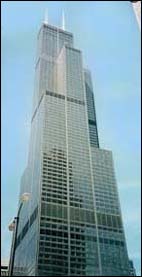
oh also I like Lucinda Williams singing whose song? "think I'll go to Chicago, look around over there"
* Low - is that the band that does ~slow ~shoegazing ?sth like that, rg telling me about...
Low (band) - Wkp: Their music is commonly described as 'slowcore,' a subgenre characterised by slow tempos and minimalist arrangements. They are one of the earlier bands to adopt and popularize the style, making them considerable contributors to the slowcore movement. (It is worth noting that the band dislike this tag. In an interview Alan Sparhawk says of descriptions of their music: What's the cheesiest? Slow-core. I hate that word. The most appropriate is anything that uses the word minimal in it, but I don't think anybody's made one up for that. ) Parker and Sparhawk's striking vocal harmonies represent perhaps the group's most distinctive element; critic Denise Sullivan writes that their shared vocals are 'as chilling as anything Gram and Emmylou ever conspired on -- though that's not to say it's country-tinged, just straight from the heart.' mmmm
Subscribe to:
Posts (Atom)